Target Behavior
Theta-tDCS improved sleep
Anode (+) RED Electrode
DLPFC F3
Cathode (−) BLACK Electrode
Mastoid P10
Study (linked)



tDCS Electrode Placements for Sleep. See Brain Maps Below. Case Studies Cited & Linked to Source.
See brain maps below. Case studies cited and linked to source.
| Target Behavior |
Anode (+) RED Electrode |
Cathode (−) BLACK Electrode | Study (linked) |
|---|---|---|---|
| Theta-tDCS improved sleep | DLPFC F3 | Mastoid P10 | Marshall, Kirov, et al. (2011) |
| Theta-tDCS improved sleep | DLPFC F4 | Mastoid P9 | Marshall, Kirov, et al. (2011) |
The 10–20 International System of Electrode Placement
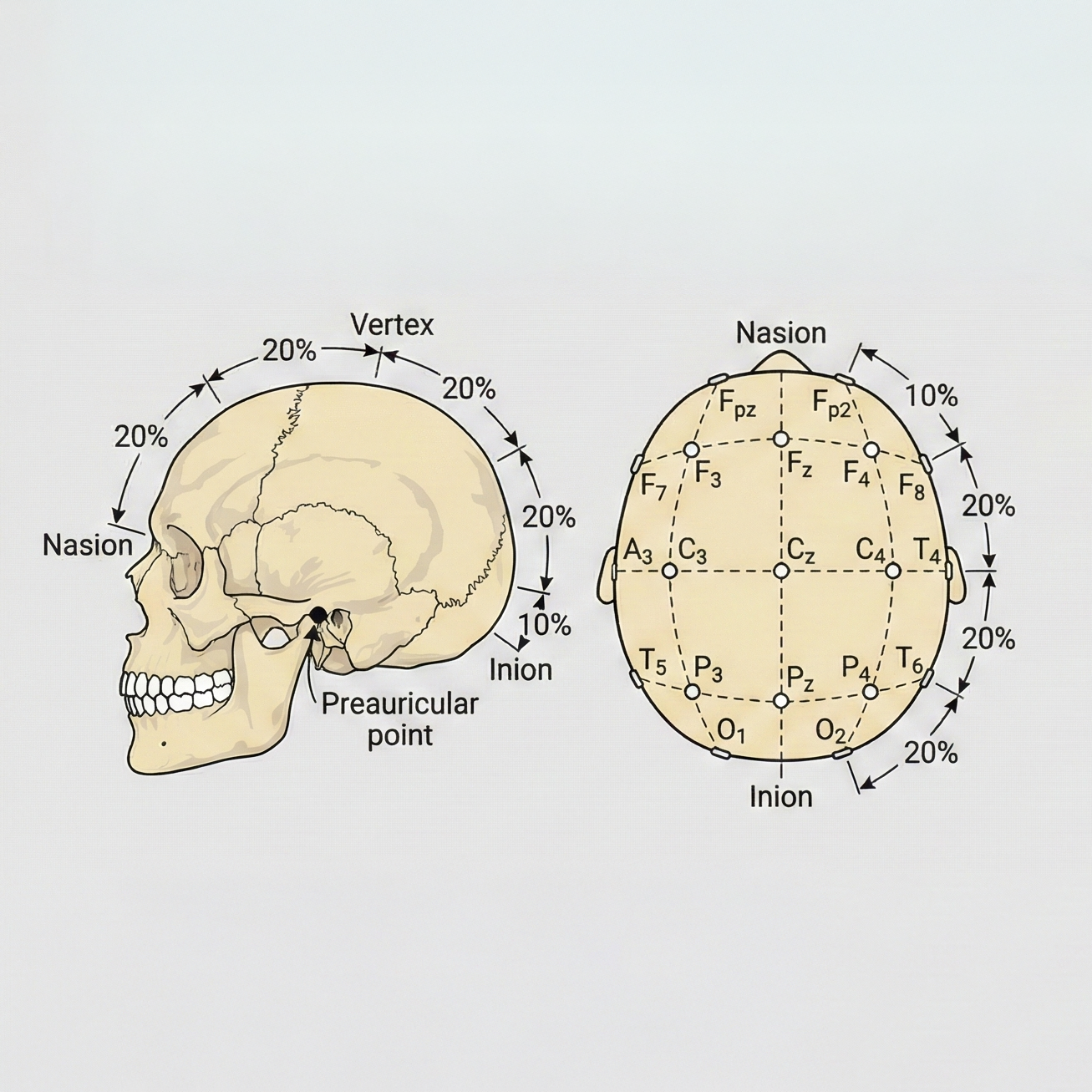
Skull Landmarks and Measurements
(10-20 System)

Extended 10-10 System
Top View


Sleep can slip away for many reasons. The mind stays active. Thoughts repeat. The body lies still, yet rest does not come. This is where gentle brain support may help. tDCS placement for sleep is used by people who want a calmer mind at night without adding more strain.
tDCS uses a very low current. It moves across the surface of the head. It does not force sleep. It supports the brain in slowing down. Many users of TheBrainDriver ®r turn to this method to build a more natural sleep pattern over time.
The front part of the brain controls focus, planning, and thinking. That same area can stay too active at night. When it does, sleep gets delayed.
The goal of tDCS placement for sleep is simple. It helps reduce activity in that front region. When that area becomes quieter, the body can follow. Calm signals increase. Sleep becomes easier to reach.
This is not about shutting the brain off. It is about guiding it into a slower state. Placement matters more than anything else. The same device can feel very different depending on where it is used.
With proper tDCS placement for sleep, the focus is usually on the forehead. This area connects to mental activity that often keeps people awake.
A common approach places the cathode on the center or left side of the forehead. The anode is then placed on the shoulder or upper arm. This setup helps shift the balance away from overthinking.
Users often describe a subtle quieting effect. Thoughts feel less sharp. The urge to keep thinking fades a bit. This gentle shift makes it easier to move into sleep.
Timing plays a role in how the body responds. Most people use tDCS placement for sleep shortly before going to bed. A session of around twenty to thirty minutes is typical. This gives the brain time to adjust before sleep begins.
Using it too early may not create a strong effect at bedtime. Using it too late may feel unusual for some users. A steady routine helps the brain recognize the pattern.
Regular use matters more than long sessions. Small, repeated support tends to work better than one long attempt.
The sensation is mild. Some feel a light tingling at the start. Others feel almost nothing at all.
Over a few sessions, changes may begin to show. The mind may settle faster at night. The time it takes to fall asleep may shorten. Night waking can become less frequent.
Not every night will feel the same. Sleep is not fixed. It shifts with stress, habits, and routine. Still, many users report that consistent tDCS placement for sleep helps create a more stable pattern over time.
The process does not need to feel technical. Pads should be slightly wet to allow good contact. The electrode on the forehead should sit flat and secure. The second electrode rests on the arm or shoulder. Once the device is set, the session can begin.
Stillness helps. Sitting or lying quietly allows the brain to respond better. There is no need to combine it with other activities. Simple use tends to give better results.
Low current is key. More is not better in this case. A gentle, steady level works best for sleep support.
Skin should be clean and healthy before use. Any discomfort is a sign to stop and adjust. Following the guidance that comes with the device is always important.
The tDCS application to sleep is not intended to overwhelm, but rather to assist. The balance is respected to ensure the process is safe and effective.
tDCS works best when paired with calm habits. A quiet room helps. Lower light in the evening supports the body clock. Keeping a steady sleep time each night builds rhythm. Reducing screen time before bed also helps the brain slow down.
These steps are simple, yet they make a clear difference. Together with tDCS placement for sleep, they support deeper rest.
Sleep improves in layers. It does not change in one moment. The brain needs time to learn a new pace.
With steady use, clear placement, and simple habits, rest can feel more natural again. TheBrainDriver ®r stands for that quiet shift, helping real people ease into better sleep with simple tools that respect how the brain works.